Security deposit rules every renter should document
What to record around a move-in checklist, deposit receipt and repair request, with local-law caveats.
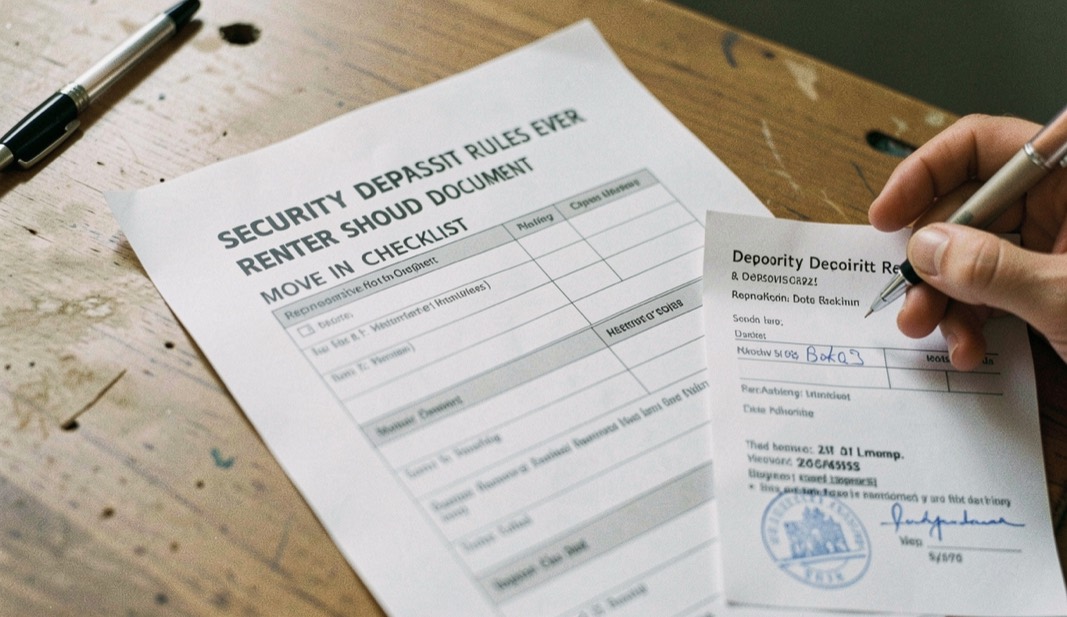
Create a move-in record
A security-deposit dispute often turns on the condition of a home at two different dates. Create the move-in record before or immediately after possession, using the landlord's form if one is supplied. Walk room by room and note floors, walls, ceilings, doors, windows, fixtures, appliances, smoke alarms, keys and outdoor areas. Write down existing marks with a neutral description rather than an argument about who caused them.
Photographs or video can support the written checklist when they are dated, organized and clearly connected to the room. Keep the original files and a copy of anything sent to the landlord. HUD materials for assisted housing describe joint inspections and written records of results. Those materials do not set the rule for every private rental, but they show why a condition report is useful evidence.
Save the money trail
Keep the lease, application, deposit receipt, payment confirmation and any notice that explains the amount or purpose of the deposit. Record the date, method and recipient of every payment. If the lease calls the money a fee, pet deposit, last month's rent or security deposit, copy the exact wording. The label can matter under state law, and a reader should not have to infer it from a bank statement.
Also keep the landlord or management contact used for notices and the address where written communications must be sent. A conversation can be helpful, but follow important phone calls with a short written summary and retain the reply. This creates a timeline without turning every ordinary maintenance message into a dispute.
Report repairs with useful detail
A repair request should identify the location, the observable problem, when it began and the access needed. Attach a photograph only when it helps explain the issue, and avoid including unrelated personal information. State whether the issue is worsening or affects safety, water, heat, electricity or access. Keep the request, delivery proof and response together.
Do not assume that a repair request automatically determines who pays or how a deposit may later be used. Those questions depend on the lease and applicable law. The Consumer Financial Protection Bureau explains that renters have local, state and federal rights and that a lease should be read before seeking outside help. Use the official housing or legal-aid source for the place where the property is located.
Prepare for move-out
Review the notice and cleaning provisions early. Ask whether a pre-move-out inspection is available, and document the condition after belongings are removed. Return keys, remotes and access devices in a way that can be proved. Give the forwarding address and keep a copy of the message. If the property manager provides a move-out form, read it before signing and record any disagreement in writing.
HUD's housing guidance distinguishes ordinary wear from damage and recommends keeping inspection reports. The exact test and deadline are not universal, so use that principle as a record-keeping prompt rather than a conclusion about a deduction. A clear before-and-after file lets the parties compare evidence instead of arguing from memory.
Check the local deadline and response
After moving out, locate the official state or local rule on deposit return, itemized deductions, interest and notice. Compare the received statement with the lease, the checklist and the rule. If a deduction is unclear, ask for an itemized explanation and keep the request factual. If the issue remains unresolved, USAGov points renters to state agencies, housing offices and legal aid.
This article is general educational information for renters in the United States. It is not a calculation of a lawful deposit or a prediction about a particular deduction. The strongest file is simple: signed lease, payment record, condition reports, repair requests, move-out proof and the official rule for the property's jurisdiction.
One document renters often overlook is the state identification they already hold. An ID accepted at the polls is issued by the same state office that handles voter registration, so the address on it can support a deposit file when a lease or utility bill is missing. Rules differ by state, and Idaho is one example: registering and voting in Idaho walks through the steps and the documents involved. Check your own state's requirements before relying on a voter ID card as proof of residency.